PropTech · SaaS · Resident portal

Tana – one shared place for life in your building.

When conversations live in chats, documents in separate folders and decisions in different people's heads, a shared overview is missing. Tana brings these workflows together in a mobile platform for residents, owners and the people who manage their building.
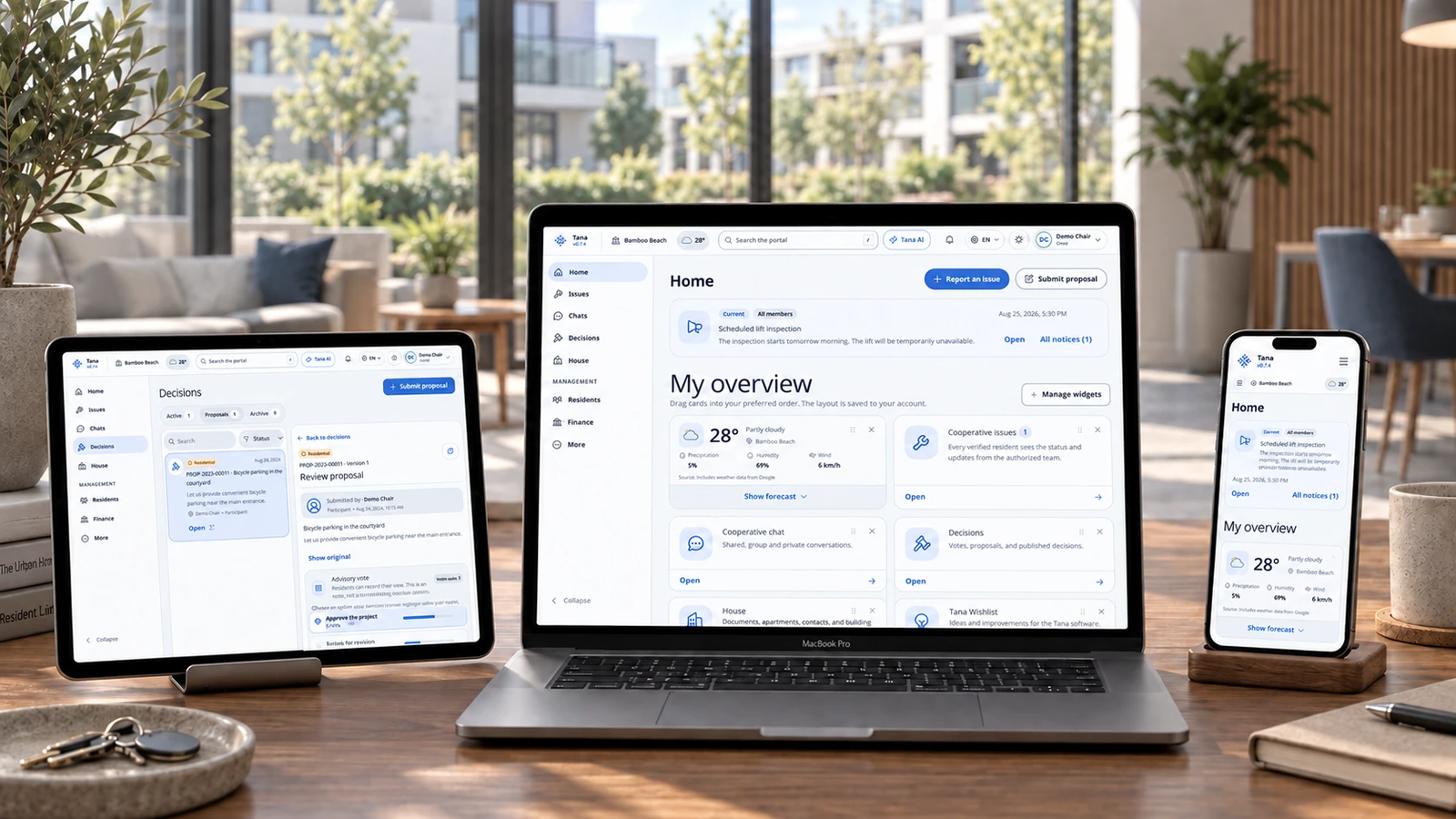
Tana on a MacBook, iPad and iPhone in an illustrative residential setting, with English demo views
The challenge & implementation

From scattered information to shared workflows.

Tana grew out of everyday life in a housing cooperative in Georgia. Different languages, scattered information and competing document versions made collaboration difficult. A responsive resident PWA, management interfaces and the public website now connect to one multi-tenant platform. Roles determine which information is accessible. AI helps translate and organise content without replacing the organisation's approval processes.
Project status
Active pilot at Bamboo Beach, Georgia; evolving through feedback from real workflows.
Media Shell's role
Product design, UX/UI, full-stack development, AI integration, APIs and operational workflows.
Product languages
Georgian, Russian, English and German (KA / RU / EN / DE).
Stack
React, TypeScript, Django, Django REST Framework, PostgreSQL, OpenAPI, Keycloak, GPT
Technical foundations
Tenant separation with PostgreSQL row-level security, roles through Keycloak/OIDC, TypeScript types generated from OpenAPI, and persisted AI jobs with permission checks. Domain changes, audit records and outbox entries are written together; separate releases support controlled updates and rollback.
Product modules

One portal for everyday life in the building.

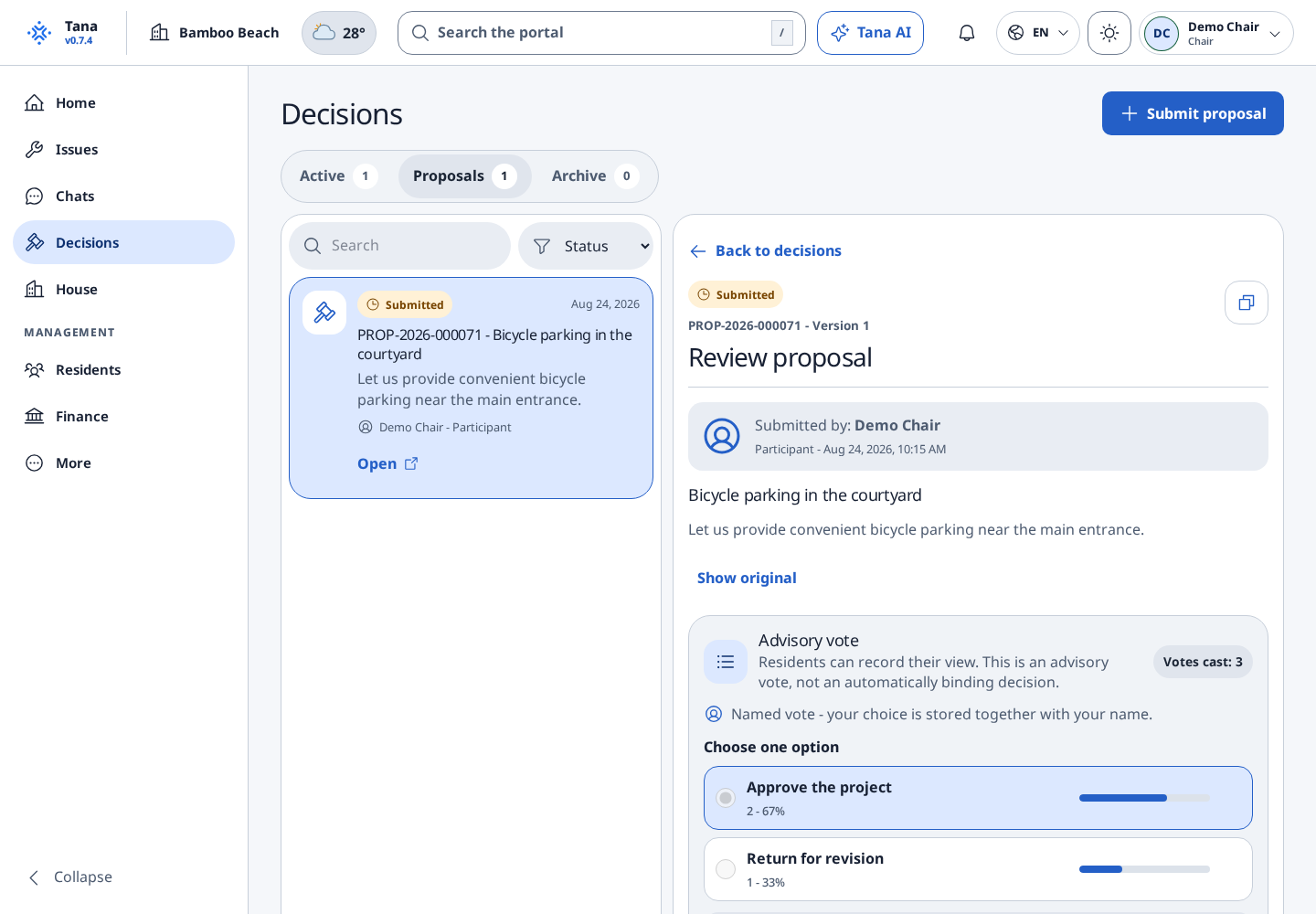
Tana in English: bicycle parking proposal with an advisory vote and demo data
Product view with demo data · captured on 5 September 2026, version 0.7.4.

Residents and management

  • Profiles, invitations, property assignments and scoped permissions connect people to the areas relevant to them.
  • Family access and management roles reflect different responsibilities.

Communication and requests

  • Chats, photos, notifications and tracked issues keep conversations connected to the task they concern.
  • Existing WhatsApp exports can be imported with their included media and organised by topic; this is not an ongoing WhatsApp synchronisation.

Documents across languages

  • Originals, versions, previews and AI translations stay connected. Completed processing results can be reused.
  • Machine translation helps people understand content; it is not a certified translation.

Finances in context

  • Contributions, bank transactions imported from CSV or Excel, expenses and matching suggestions show where each item stands.
  • Matching remains subject to review; the system does not initiate bank transfers.

Participation with context

  • Proposals, discussions and polls incorporate access rules and traceable results.
  • Binding decisions require a separate legal and technical assessment.

Rentals and services

  • Listings, availability, price calculation and booking requests extend building management. Owners decide on requests.
  • Shared service orders track participation and costs. The booking flow does not process online payments.

Knowledge beyond chat history

  • Topic-based FAQs, permission-aware content search and the “Ask Kakha” assistant help people find information and understand processes.
  • Roles and access permissions determine which content the assistant may read.

A clear change history

  • Published versions, roles, timestamps and reasons make changes easier to understand.
  • Versioned publications and controlled release processes support operations and ongoing development.

Similar workflows in your organisation?

Together we define the roles, modules and interfaces your management team needs.

Discuss your project